Aromatic Bitters (Homemade)
Bar Prep • bitters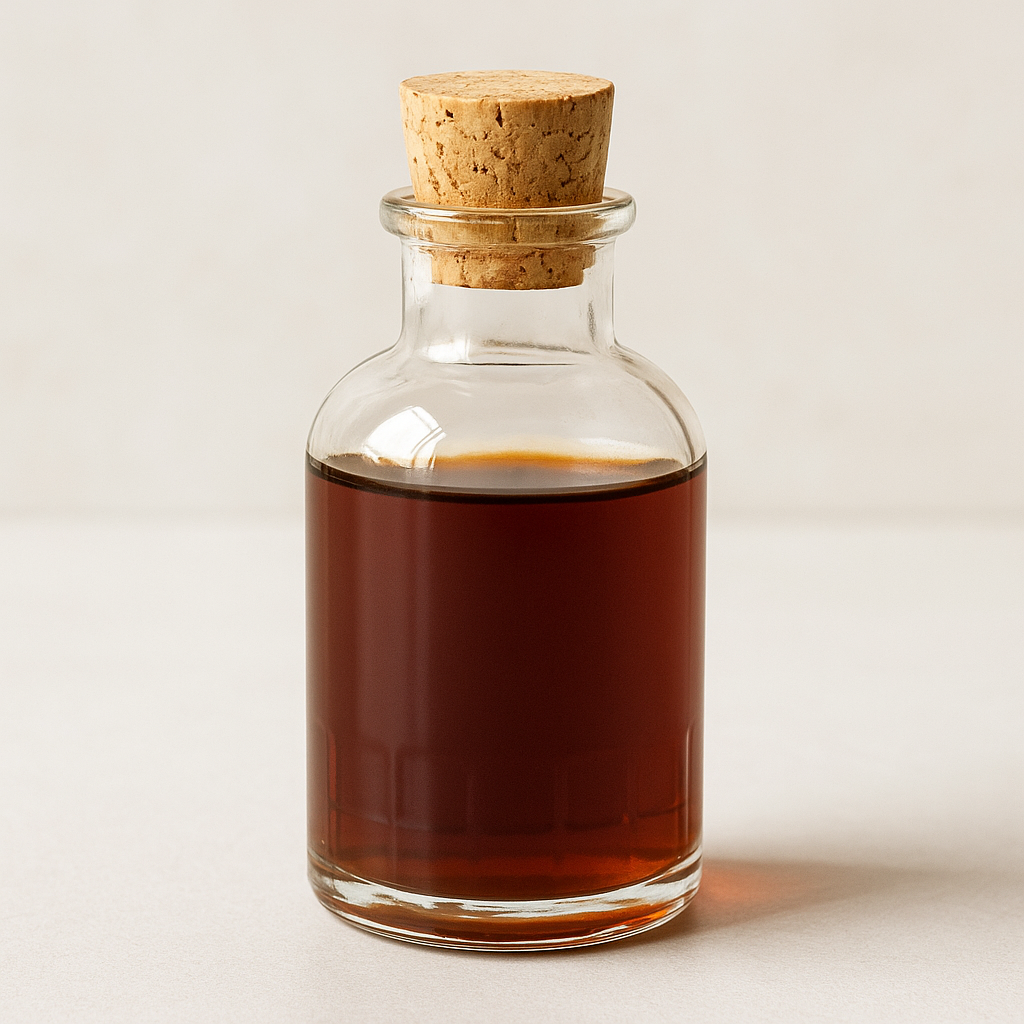
Description
A concentrated homemade aromatic bitters inspired by classic Angostura-style recipes. Bittering root (gentian) provides the backbone; cassia, clove, cardamom, orange peel and other aromatics add spice and complexity. Use as a few drops to season cocktails, desserts or cooking.
History
Aromatic bitters developed in the 19th century as medicinal tinctures and later became essential cocktail flavoring (Angostura being the most famous example). Homemade bitters follow the traditional tincture method—high-proof spirit extracting bitter and aromatic compounds from botanicals.
Instructions
Step 1.
Ingredients (yields approx. 200–250 ml):
- 250 ml high-proof neutral spirit (at least 40% ABV / 80 proof; 50–75% ABV / 100–150 proof preferred)
- 20 g gentian root (primary bitter)
- 8 g dried sweet orange peel (about 2 Tbsp)
- 5 g cassia or cinnamon bark (1–2 small sticks)
- 3 g whole cloves (about 6–8 cloves)
- 3 g green cardamom pods (8–10 pods, lightly crushed)
- 3 g star anise (1–2 whole)
- 3 g coriander seed (1 Tbsp, lightly crushed)
- 2 g dried chamomile or dried lavender (optional, 1 tsp)
- 3 g dried angelica root or orris root (optional, 1 tsp)
- (Optional) 5–10 ml vegetable glycerin for mouthfeel or 1–2 tsp simple syrup to sweeten slightly
- 250 ml high-proof neutral spirit (at least 40% ABV / 80 proof; 50–75% ABV / 100–150 proof preferred)
- 20 g gentian root (primary bitter)
- 8 g dried sweet orange peel (about 2 Tbsp)
- 5 g cassia or cinnamon bark (1–2 small sticks)
- 3 g whole cloves (about 6–8 cloves)
- 3 g green cardamom pods (8–10 pods, lightly crushed)
- 3 g star anise (1–2 whole)
- 3 g coriander seed (1 Tbsp, lightly crushed)
- 2 g dried chamomile or dried lavender (optional, 1 tsp)
- 3 g dried angelica root or orris root (optional, 1 tsp)
- (Optional) 5–10 ml vegetable glycerin for mouthfeel or 1–2 tsp simple syrup to sweeten slightly
Step 2.
Equipment: amber glass jar with tight lid (500 ml), digital scale or spoons, fine mesh strainer/cheesecloth, coffee filter or paper filter, amber dropper or dasher bottles for storage, funnel.
Step 3.
Steps:
1. Prepare botanicals: weigh and lightly crush seeds and pods (cardamom, coriander) to expose oils. Break cinnamon into smaller pieces. If using fresh orange peel, avoid white pith; use dried peel for consistency.
2. Combine in jar: add gentian root and all dried botanicals to the jar. Pour the spirit over the botanicals, ensuring they are fully submerged. Leave about 1–2 cm headspace.
3. Seal and steep (primary extraction): close jar tightly and store in a cool, dark place. Shake the jar vigorously once or twice daily. Steep primary bittering agent (gentian + base aromatics) for 7–14 days. Taste by diluting one drop in a teaspoon of water or spirit to judge bitterness/aroma.
4. Add delicate aromatics (optional second stage): after the initial steep, add more delicate ingredients (chamomile, citrus peel if not already added, some cardamom/starter spices) for 3–7 days to layer aroma. Continue daily shaking and periodic tasting.
5. Strain: when flavor balance is achieved, strain the tincture through a fine mesh strainer and then through cheesecloth into a clean container. For clarity, filter through a coffee filter or paper filter—this may take several passes.
6. Adjust & finish: taste the filtered bitters. If desired, add 5–10 ml vegetable glycerin for silkiness or up to 1–2 tsp simple syrup to slightly mellow bitterness. If you added glycerin or syrup, mix well and let rest 24–48 hours, then taste again.
7. Bottle & label: using a funnel, transfer the finished bitters into amber dropper or dasher bottles. Label with contents and date.
8. Rest & use: let bitters rest for 1 week to let flavors marry (optional). Use in cocktails by the dash. Shake bottle before use if sediment appears.
1. Prepare botanicals: weigh and lightly crush seeds and pods (cardamom, coriander) to expose oils. Break cinnamon into smaller pieces. If using fresh orange peel, avoid white pith; use dried peel for consistency.
2. Combine in jar: add gentian root and all dried botanicals to the jar. Pour the spirit over the botanicals, ensuring they are fully submerged. Leave about 1–2 cm headspace.
3. Seal and steep (primary extraction): close jar tightly and store in a cool, dark place. Shake the jar vigorously once or twice daily. Steep primary bittering agent (gentian + base aromatics) for 7–14 days. Taste by diluting one drop in a teaspoon of water or spirit to judge bitterness/aroma.
4. Add delicate aromatics (optional second stage): after the initial steep, add more delicate ingredients (chamomile, citrus peel if not already added, some cardamom/starter spices) for 3–7 days to layer aroma. Continue daily shaking and periodic tasting.
5. Strain: when flavor balance is achieved, strain the tincture through a fine mesh strainer and then through cheesecloth into a clean container. For clarity, filter through a coffee filter or paper filter—this may take several passes.
6. Adjust & finish: taste the filtered bitters. If desired, add 5–10 ml vegetable glycerin for silkiness or up to 1–2 tsp simple syrup to slightly mellow bitterness. If you added glycerin or syrup, mix well and let rest 24–48 hours, then taste again.
7. Bottle & label: using a funnel, transfer the finished bitters into amber dropper or dasher bottles. Label with contents and date.
8. Rest & use: let bitters rest for 1 week to let flavors marry (optional). Use in cocktails by the dash. Shake bottle before use if sediment appears.
Step 4.
Notes & tips:
- Proof matters: higher-proof spirit extracts more and produces a longer-lasting tincture. If using lower-proof liquor, expect a milder extraction and shorter shelf stability.
- Keep tasting: bitterness and aromatics evolve; sample frequently after day 5 to avoid over-extraction of harsh tannins.
- Sanitation: all glassware and utensils should be clean to avoid contamination.
- Yield will vary after filtration; expect about 200–250 ml finished bitters.
- Proof matters: higher-proof spirit extracts more and produces a longer-lasting tincture. If using lower-proof liquor, expect a milder extraction and shorter shelf stability.
- Keep tasting: bitterness and aromatics evolve; sample frequently after day 5 to avoid over-extraction of harsh tannins.
- Sanitation: all glassware and utensils should be clean to avoid contamination.
- Yield will vary after filtration; expect about 200–250 ml finished bitters.
Storage
Store in amber glass dropper or dasher bottles in a cool, dark place. Keep lid tight. Label with production date. High-proof bitters are shelf-stable for years; if you added water or sugar, refrigerate and monitor for off-odors or cloudiness.